
The underworld
A city of castes, ambition, and ash.
The region begins as a lost outpost. Its population grows from tireless Imps into a layered infernal society whose needs, privileges, and political weight change the way the city must be governed.

Residents
Four castes, four kinds of pressure

Imps
The laboring base of the city: numerous, practical, and essential to early growth.
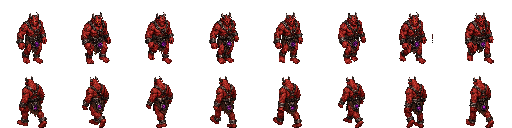
Lesser Demons
A rising workforce with stronger service demands and a greater stake in stability.

Hell Nobles
Privileged residents who expect prestige, culture, access, and political attention.
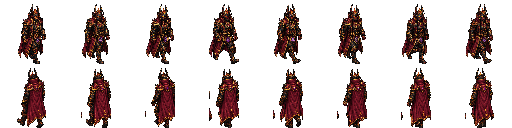
Archdemons
The apex caste. Few in number, immense in influence, and costly to satisfy.
Population is simulated as cohorts. The demons walking your streets are readable representatives of the city—not disposable hero units.
The region
Nine sectors, one connected capital
The full region is a 3×3 grid of 64×64-tile sectors. Each new sector adds terrain, routes, resources, and space—but also extends the logistics and service networks you must keep coherent.
The defined region consists of the Start Sector, Bone Waste, Ember Cliffs, Empty Gate, Ash Basin, Soul Marsh, Iron Break, Black Ridge, and Deep Rift.
- Ash fields and hostile ground shape expansion.
- Road links make distant districts part of one economy.
- Pollution, heat, corruption, and prestige alter desirability.
- Sector projects turn geography into long-term strategy.

Original underworld
Not heroes and monsters—a functioning society
Hell's Contractor treats the underworld as a place with infrastructure, bureaucracy, class conflict, industry, entertainment, faith, and status. Demon families and further factions can grow from that foundation, but the currently defined population system is built around the four castes above.